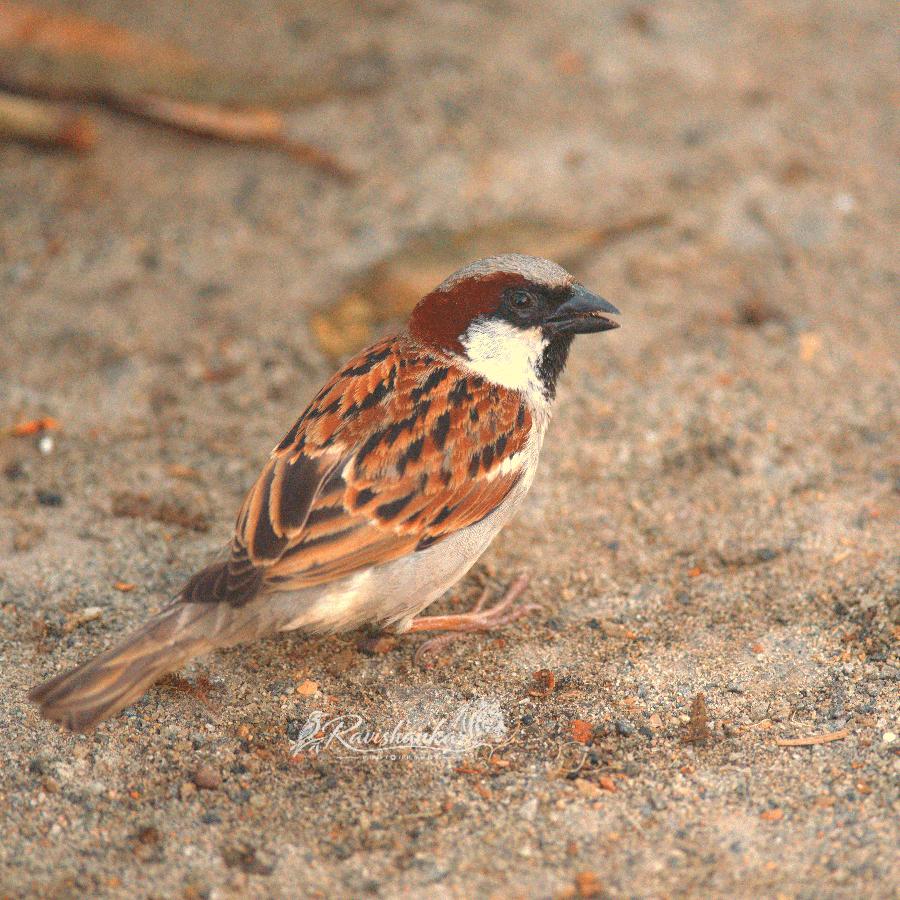

Remember the little brown bird that used to sit on your balcony, hop around the garden, or chirp outside your window?
The house sparrow was once one of the most familiar birds in Indian cities.
Today, in many urban areas, it is becoming harder to find them.
And that should worry us.
Where Have All the Sparrows Gone?
House sparrows are not disappearing everywhere at the same speed, and there is no reliable evidence that their population across India suddenly fell by 97% in just five years.
But the overall picture is still concerning.
The State of India's Birds assessment has reported declining house sparrow numbers in India. Its latest data shows that the species is currently declining nationally, while some states have recorded much larger falls. In Karnataka, for example, the estimated long-term decline is around 47%.
So what is happening?
The answer is probably not one single problem.
It is the way we are changing our cities.
Our Buildings Have Changed
Older Indian houses often had tiled roofs, wooden beams, small holes, open spaces and little gaps where sparrows could build their nests.
Modern buildings are very different.
Concrete walls are smooth. Roofs are sealed. Windows are covered with glass. Small gaps and cavities are closed to keep buildings clean and airtight.
For us, this may look like better construction.
For a sparrow, it can mean:
“There is nowhere to build a nest.”
House sparrows are cavity-nesting birds and commonly use holes and small spaces in buildings. A study in Tamil Nadu found a strong relationship between the availability of natural nesting sites and sparrow numbers.
Another study from Coimbatore found that house sparrows frequently use buildings and other man-made structures for nesting.
In other words, our buildings used to accidentally provide homes for them.
Our modern buildings often don't.
A Garden Without Insects Is Not Really a Sparrow-Friendly Garden
There is another problem that we don't notice easily.
We have replaced many natural spaces with lawns, tiles, concrete and decorative plants.
We spray pesticides to remove insects.
But insects are extremely important to baby sparrows.
Adult sparrows eat plenty of seeds and grains. But growing chicks need insects and other small invertebrates as an important source of food.
So when we remove insects from our gardens, we may also be removing an important food source for the next generation of sparrows.
A perfectly clean garden may look beautiful to us.
But a slightly wild garden—with native plants, insects, seeds and small bushes—can be much better for birds.
What About Mobile Towers?
You may have heard that radiation from mobile towers is responsible for the disappearance of sparrows.
There have been studies that found an association between electromagnetic radiation and lower numbers or altered behaviour of house sparrows. For example, studies in Spain and Belgium reported relationships between radiofrequency exposure and sparrow abundance.
But this should not be presented as a proven cause of India's sparrow decline.
The scientific evidence is still debated, and researchers have identified many other factors that can affect sparrows, including habitat loss, nesting opportunities and food availability.
So rather than blaming one thing, it is better to look at the bigger picture:
Our cities are becoming less suitable for wildlife.
Sparrows Are More Important Than We Think
A sparrow may look like just another small bird.
But it is part of the urban ecosystem.
Sparrows eat seeds and insects, and parents feed insects to their chicks. They are also closely connected with the plants, insects and small habitats around our homes.
And there is something else that makes them special.
They have adapted to live with us.
House sparrows have lived alongside people for thousands of years. They have learned to use our buildings, our food and our neighbourhoods.
If even this highly adaptable bird is struggling in some cities, it is worth asking what our urban environment is becoming for other wildlife.
The Good News: We Can Help
The story doesn't have to end with disappearing sparrows.
We don't need to build a forest to help them.
Small changes around our homes can make a difference.
🏠 Give Them a Place to Nest
Install a sparrow nest box on a balcony, wall or other safe location.
A nest box can replace some of the natural cavities that modern buildings have removed.
Studies in India have shown that artificial nest boxes can be used by house sparrows. In a study from Rameswaram, researchers recorded a substantial number of active nests in artificial nest boxes.
🌾 Keep Some Food Available
You can place a small bird feeder with suitable grains such as:
- Millet
- Rice
- Broken wheat
- Other bird-safe seeds
Keep the feeder clean and protect the food from rain and contamination.
💧 Don't Forget Water
A simple bowl of clean water can be extremely useful, particularly during India's hot summer months.
Keep it somewhere shaded and change the water regularly.
If possible, provide a shallow container so smaller birds can safely drink and bathe.
🌱 Make Your Garden More Natural
You don't need a perfectly maintained garden.
Plant native trees, shrubs and flowering plants.
Allow some plants to flower and produce seeds. These plants can provide food, shelter and habitat for insects—which in turn can provide food for young birds.
A garden doesn't have to be spotless to be healthy.
🐛 Use Fewer Pesticides
Think twice before spraying every insect you see.
Not every insect is a pest.
Many insects are part of the food chain that supports birds and other wildlife.
Reducing unnecessary pesticide use can help create a healthier little ecosystem around your home.
One Balcony Can Become a Sparrow Home
Imagine this.
One apartment puts up a nest box.
Another keeps a small water bowl.
Someone grows native plants.
Another family stops using unnecessary pesticides.
A school puts up several nest boxes.
A housing society creates a small bird-friendly garden.
None of these actions seems very big on its own.
But together, they can create something important:
a city where birds still have a place to live.
The house sparrow doesn't need us to build a perfect forest.
It simply needs a little space.
A safe place to nest.
Some food.
Some insects.
Clean water.
And a city that leaves room for nature.
Before We Say “Where Did the Sparrows Go?”
Maybe the better question is:
“What did we change that made them leave?”
The good news is that many of those changes can also be reversed.
We can make our homes a little more welcoming.
We can make our gardens a little more natural.
We can leave some space for insects.
We can put up a nest box.
We can keep a bowl of water.
And perhaps, one morning, we may once again wake up to the sound that many of us remember from childhood:
“Chirp… chirp… chirp…”
The sparrow may be small.
But giving it a place in our cities is a big step toward making our cities better for all of us.

💬 Comments (0)
Sign in to leave a comment
No comments yet. Be the first to share your thoughts!